KnossosThe labyrinth mapped once
On screen beside Claude Code, and in the notes your agent reads while it works.
On screen beside Claude Code, and in the notes your agent reads while it works.
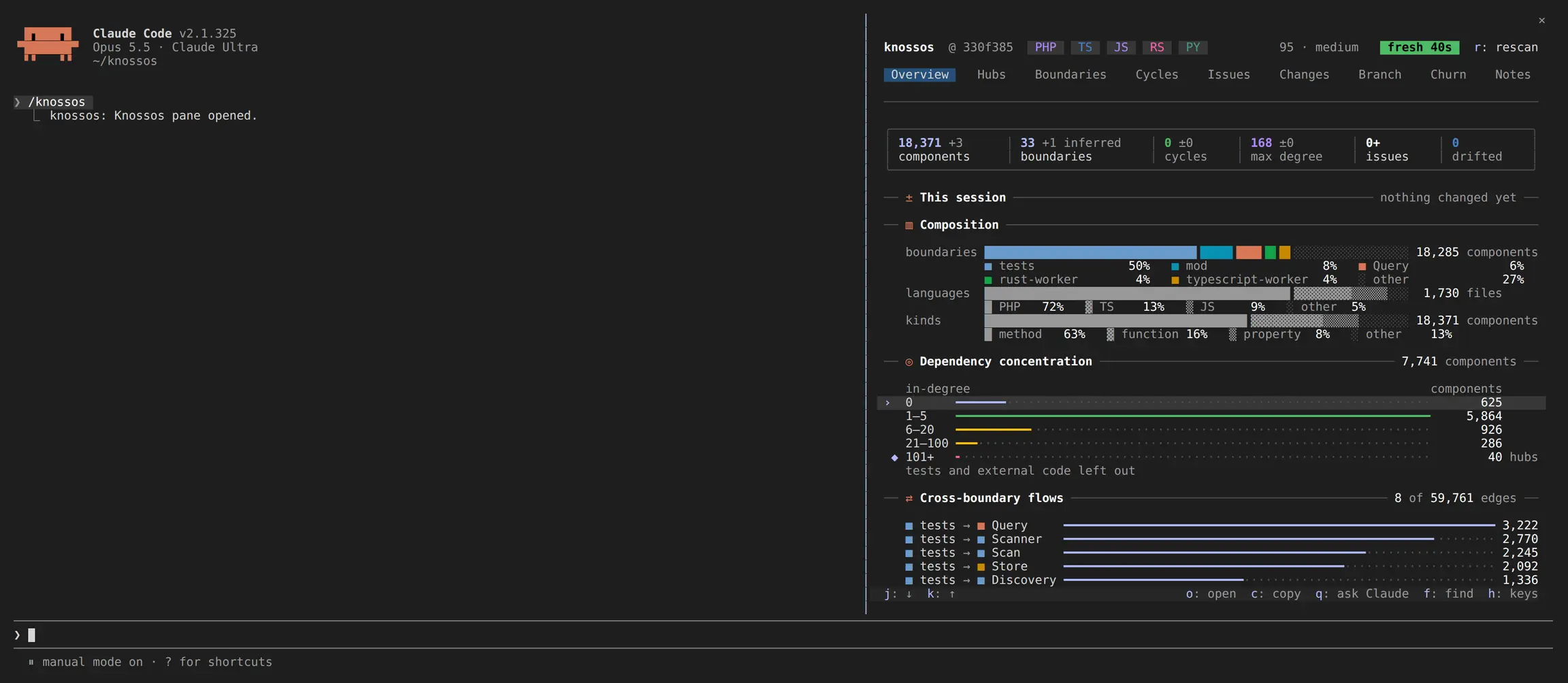
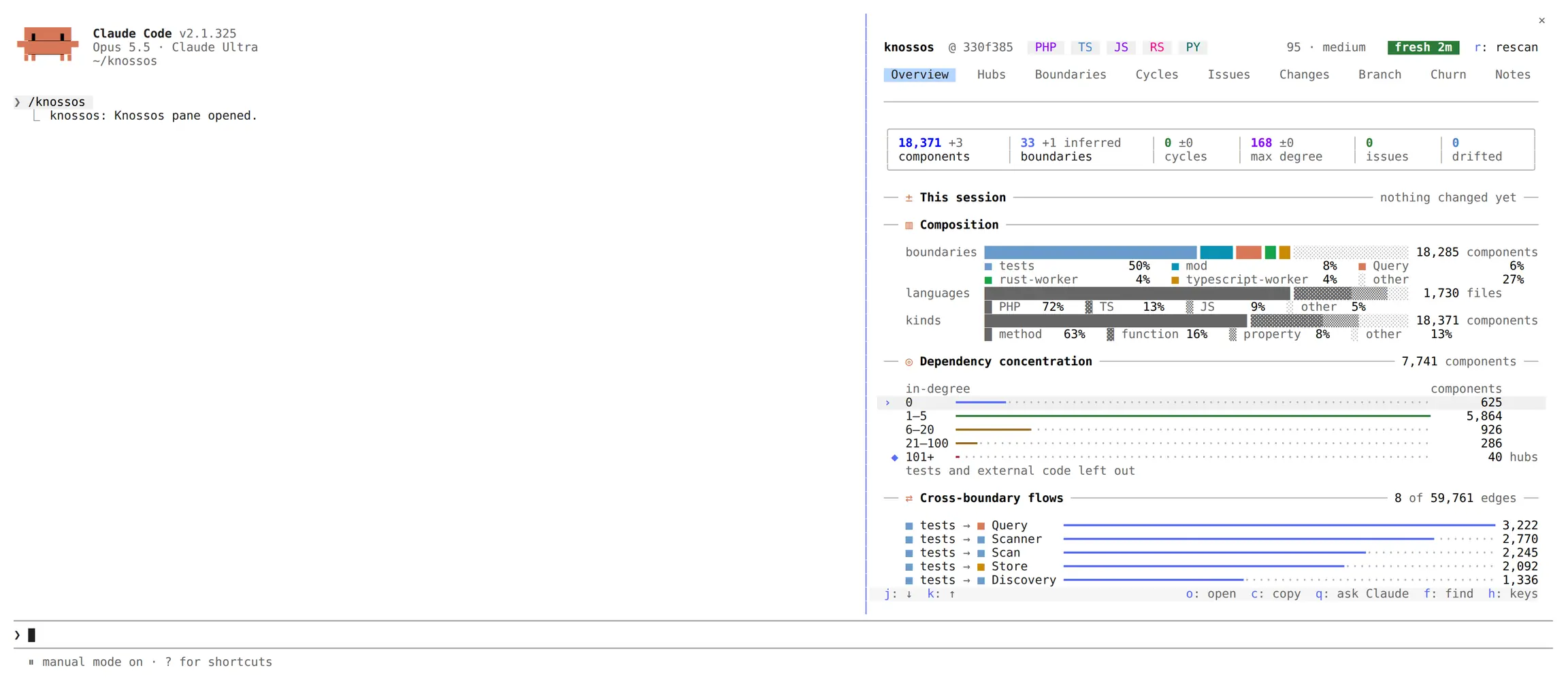
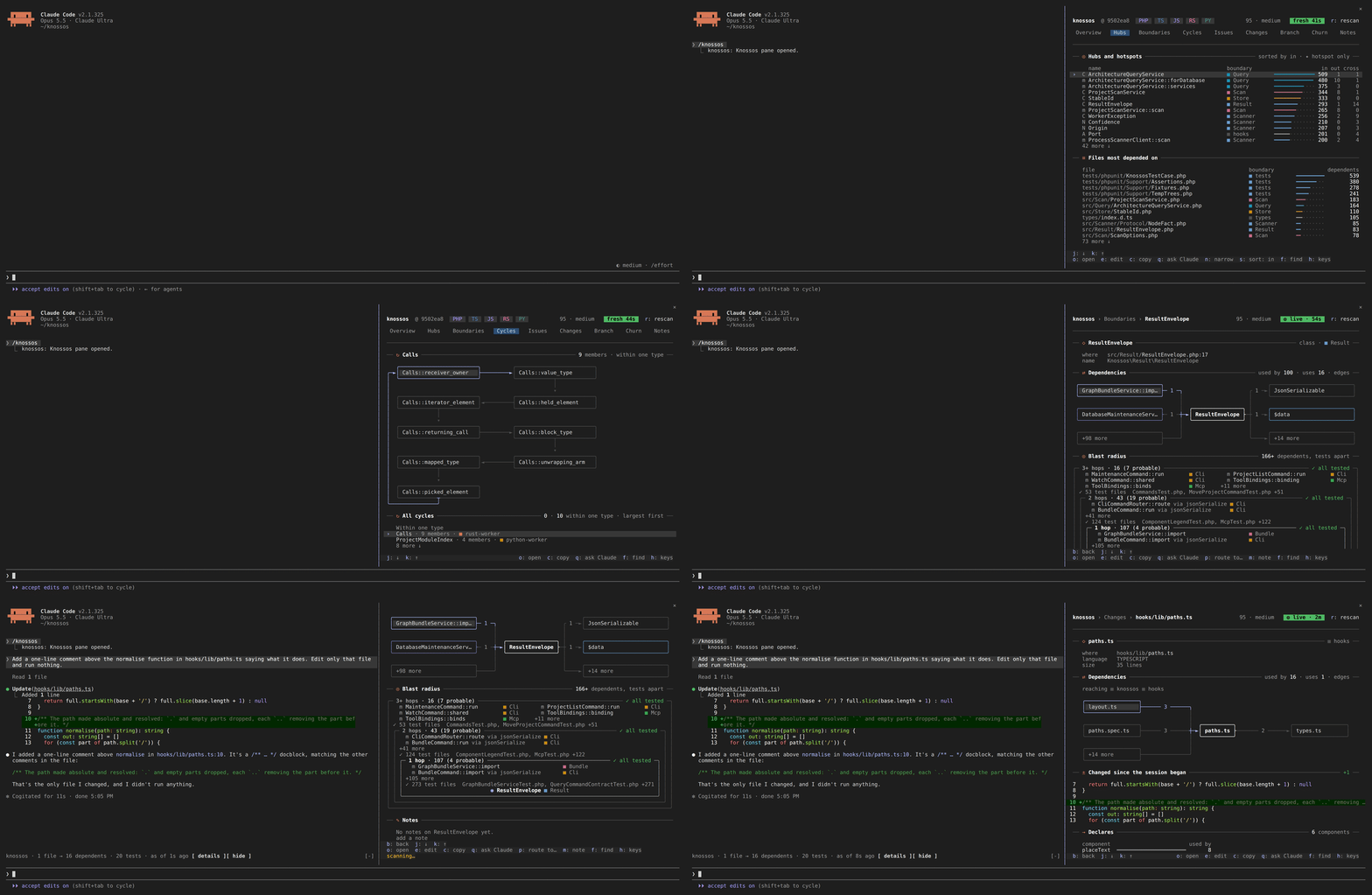
Knossos scans a repository into a local graph of its components and the relationships between them, each with the file and line that proves it. In Claude Code, /knossos opens that graph as a live pane beside your session, and the same graph answers 40 MCP tools and a CLI for Claude Code, Codex or any MCP client.
Facts that static analysis cannot prove are labelled with their confidence and origin. Nothing in the scan installs dependencies, imports a module or boots a framework.
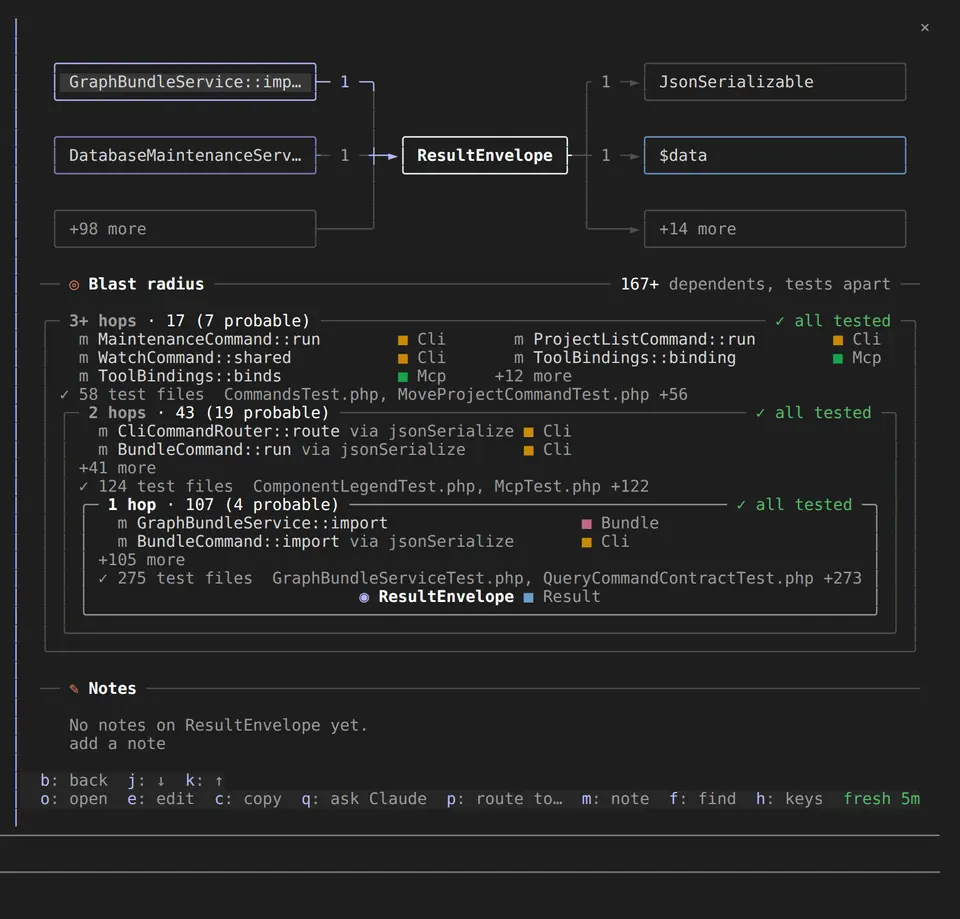
What a change to one component reaches, ring by ring, and whether a test reaches each ring.
Details and blast radius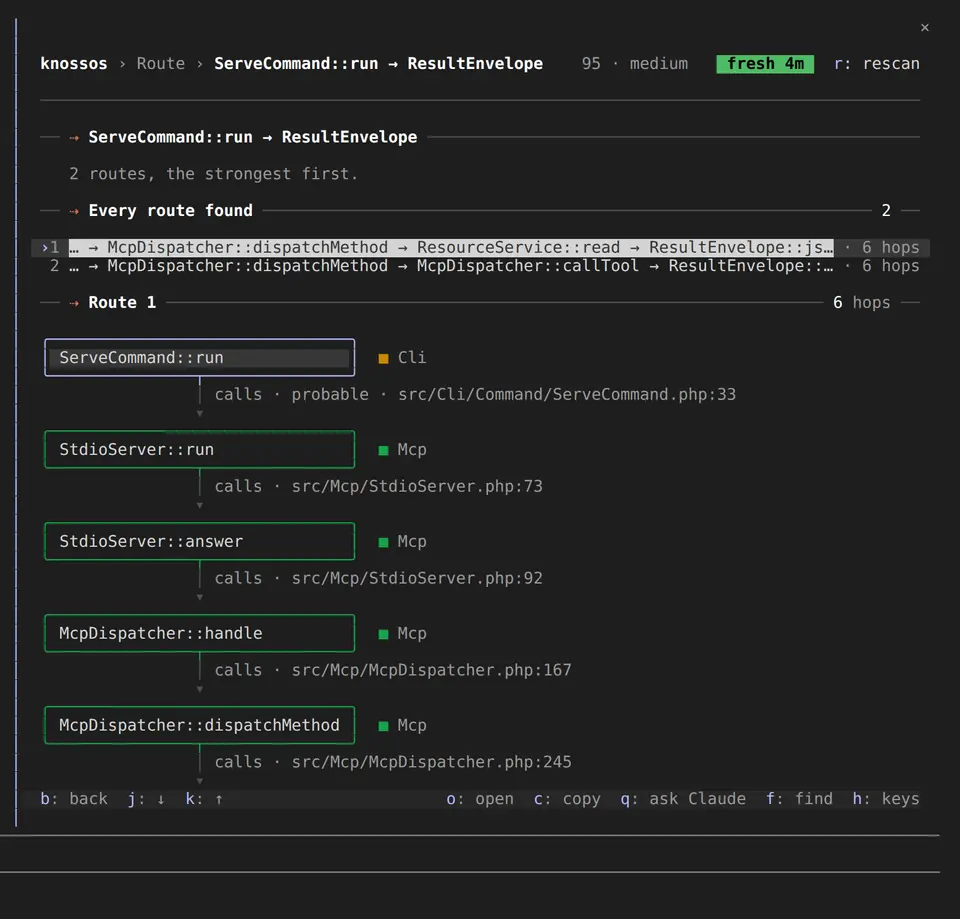
How one component reaches another, every hop with the file and line it is written at.
Routes between components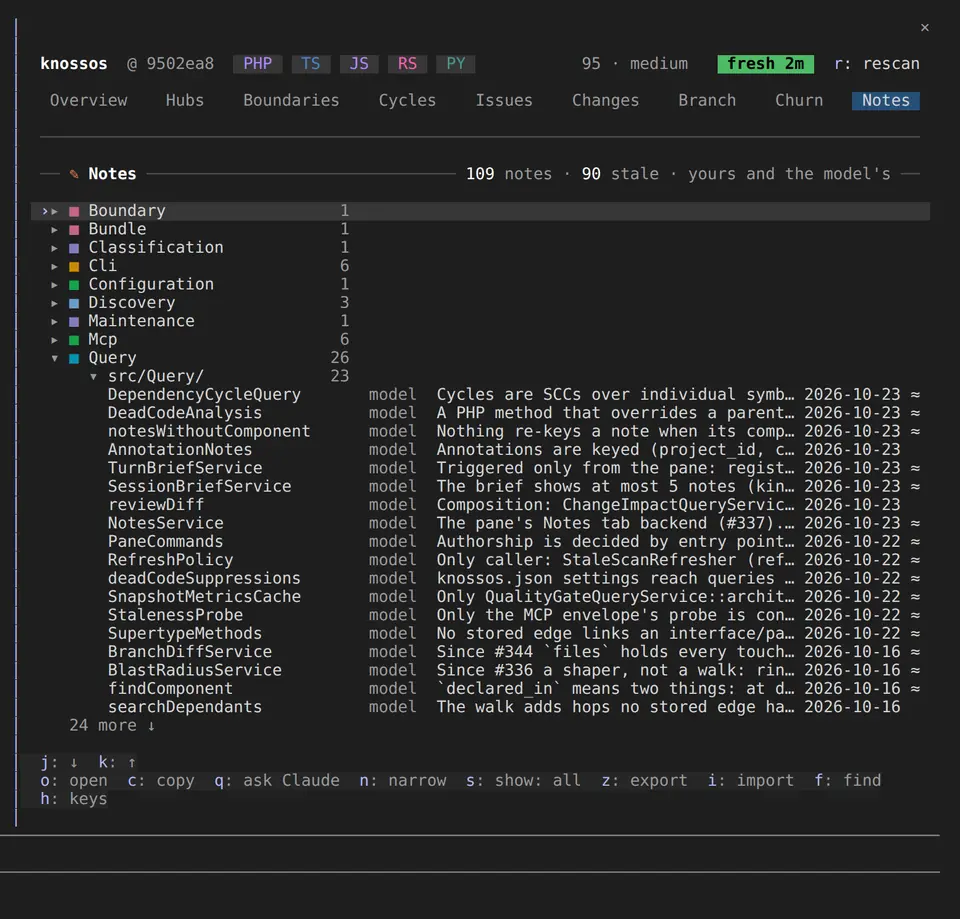
Facts you and the model keep about components, filed by where they live, with the ones that need you first.
Notes on components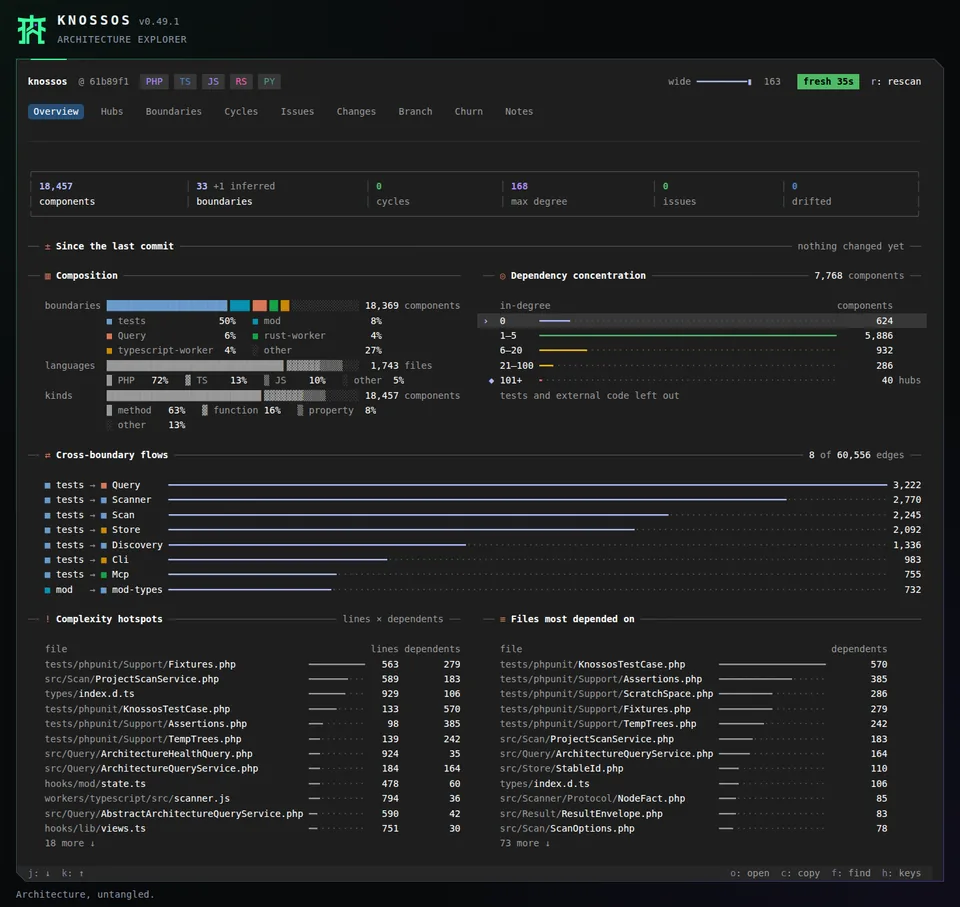
The same pane in a browser tab with knossos web, for one project and no Claude Code session around it.
A native install needs PHP 8.3 or newer with the JSON, mbstring, PDO, PDO SQLite and tokenizer extensions, Node 24 or newer, Python 3.11 or newer and Git, and knossos doctor fails without any of them. When something is missing, the installer stops before it writes anything, lists what is missing, and names the two ways out: install it, or run the installer with --mode=container, which is experimental and runs Knossos in a container with Docker or Podman. This installs the latest release natively:
curl -fsSL https://github.com/AraneaDev/knossos/releases/latest/download/install.sh | shThe installer grants the folder you run it from to the list of projects Knossos may scan, except / and your home folder when you pipe it as above; set KNOSSOS_ALLOW_ROOT to grant another folder, or pass --no-roots to grant none. Installation covers installing from a checkout or in Docker, and what to do when it does not start.